THANK YOU FOR SUBSCRIBING

Be first to read the latest tech news, Industry Leader's Insights, and CIO interviews of medium and large enterprises exclusively from Logistics Transportation Review

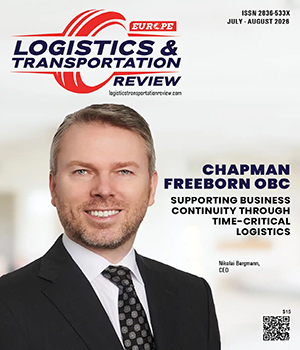
A production line is stopped because a critical component has not arrived on time. Each hour increases the impact while available transport options fail to meet the required timeline. Movement is no longer the issue; restoring continuity becomes the priority. In time-critical logistics, delays quickly turn into costs. Chapman Freeborn OBC operates in these situations, where the task extends beyond moving a shipment to restoring operations under pressure. Couriers can be deployed immediately, even when flight availability, regulatory requirements or distance create constraints. Rather than functioning as a standalone emergency service, an onboard courier (OBC) is integrated into a broader operational model for time-critical movements. Every shipment begins with a defined requirement. Size, weight, routing and delivery timelines determine the available options. For the most urgent movements, OBC remains the primary solution. Where flexibility exists, shipments can move through next-flight-out (NFO) services within commercial networks. When commercial schedules can no longer meet the required delivery window, Chapman Freeborn OBC escalates shipments to dedicated charter aircraft within the same operational structure, avoiding delays or handovers between providers. “Some customers are facing penalties of up to a million dollars per hour if they are late, while others have less critical time windows,” says Nikolai Bergmann, CEO, OBC Group. “That’s why we provide them with options depending on how time-sensitive the shipment is.”
RMS Logistic is a specialist in European time-critical logistics, dedicated exclusively to urgent and express shipments where every minute matters. Its role goes beyond transport. The company operates as a risk-containment partner, taking ownership of decisions when delays threaten production continuity, service availability, or contractual performance. By combining deep expertise in time-critical transport with modern technology, real-time visibility, and proactive risk management, RMS Logistic removes escalation burden from clients at their moments of highest exposure. With over fifteen years of operational experience across Europe, RMS Logistic is built to take control when a production line stops, machinery fails, or an aircraft is grounded and urgently needs a spare part. Rather than acting as a transport vendor, it functions as an external crisis-control partner, owning routing decisions, trade-offs, and consequences while shielding clients from cascading supply chain disruption and multimillion-euro downtime. The same discipline extends into supply chain management, where time-critical logistics is treated as a risk-management capability where missed cut-offs and delayed handovers translate directly into halted operations. Automotive, aerospace, and high-tech manufacturers rely on this approach to protect continuity, reliability, and resilience when tolerance for error is effectively zero. A broad service portfolio supports the model, including next-flight-out cargo, on-board couriers, Aircraft on Ground response, and multimodal transport across a European network. Strong airline relationships and a trusted partner base secure the earliest viable departures without overcommitting capacity. A dedicated 24/7 team manages every movement with GPS tracking, live updates, and immediate proof of delivery.


Sjoerd de Jager, Co-Founder and Managing Director
Across Europe and North America, many medium-sized ports are required to report their emissions annually, but are often shorthanded. Their small sustainability teams manage environmental planning alongside finance or strategic responsibilities, while navigating complex monitoring regulations. Much of their time goes into gathering and cleaning fragmented emissions data from visiting vessels, leaving limited capacity to focus on reducing emissions. This practical constraint is what PortXchange solves, rethinking how ports collect, validate and use emissions data to move from reporting to reduction. “Ports rely on manual processes, with 75 percent of effort spent on data collection and validation. When effort is concentrated on preparation rather than insight, progress slows,” says Sjoerd de Jager, co-founder and managing director. Measuring Emissions from Port Operations PortXchange did not begin with emissions, but with efficiency. Its first product, Synchroniser, was a port call optimisation platform built to improve coordination between shipping lines, terminals and port authorities. By tracking vessel movements across major ports, PortXchange uncovered a systemic inefficiency. Ships frequently steam at full speed towards ports only to wait at anchorage. This “hurry up and wait” pattern creates congestion, raises risks and burns unnecessary fuel.
Intermodal and Multimodal

Ana Esteves, Head of Supply Chain, Salsa
Intermodal and Multimodal

Bryn Jones, Sr. Category Manager Logistics- EMEA, Marken
Cold Chain

Cleo Kortenhorst, Senior Logistics Manager Warehouse & Outbound, Arla Foods Logistics Germany
Freight Forwarding
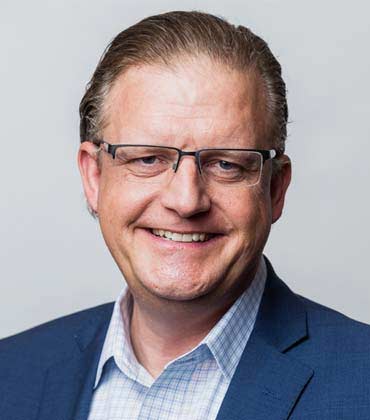
Sten Svendsen, Director Freight Forwarding & Bulk Logistics, Rulewave
Cold Chain

Mike Diamond, Senior Manager of Transportation, Sunrise Logistics, Inc.

Intermodal and Multimodal
Piotr Sedziak, Orbico Group Supply Director Europe, Orbico Group

Last Mile Delivery
Barb Murawski, Director of Materials, Planning & Logistics, Anchor Mfg. Group
Onboard courier solutions in Europe secure time-critical deliveries, ensuring regulatory compliance, operational continuity, and competitive resilience across high-value industries.
Cargo handling services improve logistics efficiency, safety, speed, and supply chain reliability across Europe.
Navigating a More Demanding Logistics Landscape
Among the organisations featured in this edition is Chapman Freeborn OBC, recognised as the Onboard Courier Solutions of the Year in Europe 2026. It works in those moments when businesses need a solution quickly and cannot afford to wait. By combining onboard courier services, commercial flight networks and dedicated charter capabilities, the company helps customers keep critical operations on track. Its global presence, strong focus on compliance and commitment to measurable sustainability reflect a practical approach to logistics, one centred on reliability, accountability and helping customers maintain business continuity when it matters most.
This issue also features perspectives from supply chain leaders working through today's most pressing challenges. Ana Esteves, Head of Supply Chain at Salsa, discusses the environmental impact of e-commerce growth and the importance of collaboration, infrastructure and smarter urban logistics to reduce emissions from last-mile delivery. Barb Murawski, Director of Materials, Planning & Logistics at Anchor Mfg. Group, shares practical insights on managing transportation costs, tariffs, fleet operations and international shipping, emphasising preparation, strong carrier relationships and accurate documentation as foundations of competitiveness.
Together, these stories show that strong logistics performance is built through preparation, adaptability and sound decision-making. We invite you to explore this edition of Logistics and Transportation Review Europe and discover how leading organisations are strengthening supply chains for a more resilient future.