THANK YOU FOR SUBSCRIBING

Be first to read the latest tech news, Industry Leader's Insights, and CIO interviews of medium and large enterprises exclusively from Logistics Transportation Review

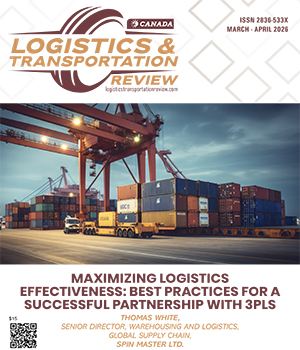
In early 2020, Spin Master’s North American warehousing and logistics team was challenged to transform 3PL warehouse operations to reduce costs and improve customer service. To-date, we have reduced annual warehousing operating costs by 35%, reduced annual retail non-compliance charges by over 80%, and improved on-time shipments to 99.7%. Following are some of the best practices for successful 3PL partnerships that we learned along the way. Building a close partnership Fundamental to a successful relationship with a 3PL provider is finding a partner with whom you can establish a high level of trust. In my view, the ideal business relationship is far more than a transactional, “zero sum” relationship in which each partner is focused only on their own profitability. My preference is always to seek out synergistic relationships, where the 3PL is a trusted partner that treats the customer’s business as their own, not only providing world-class service but proactively showing the customer ways to improve operations and reduce costs. In return, the customer is always watching for opportunities to make the 3PL more effective, which can be as easy as simplifying order processes and sharing forecast information that will help the 3PL to plan labour schedules. As with any relationship, this requires good communication, mutual respect, and the willingness of both partners to always seek out the “win-win” in every scenario. At Spin Master, we have also domiciled our own, small on-site operations teams at each site. While regular video calls were useful in maintaining ongoing coordination at the peak of the COVID-19 pandemic, they are not a substitute for the informal communication, relationship building and “walking the floor” that is possible by having our own team resident in our 3PL facilities. As time and budgets permit, we also prioritize site visits by our senior leadership, including holding at least one Business Review on-site at each facility,
How does disciplined routing improve performance in airfreight logistics? Better routes often outperform bigger budgets, especially in air freight, where time sensitivity, regulatory exposure and cost pressure collide on a daily basis. King City Forwarding has internalized that reality through five decades of disciplined, service-led forwarding. The family-owned, IATA-certified firm treats logistics as an engineered service, applying human judgment to routing decisions that protect both timelines and budgets. “From the beginning, we believed logistics is a service, which means listening closely to how our customers operate, giving their shipments personal oversight and making cost-conscious routing decisions that protect both timelines and budgets,” says Peter Lovett, vice president. Why does direct oversight strengthen exception management in shipments? A great way to ensure that is to have the people making routing decisions also speaking with customers and tracking shipments through to delivery. This practice has made King City a natural fit for shipments that require more exception management—those moving under tight timelines, with regulatory sensitivity or under physical constraints. Moreover, by integrating air, ocean, ground and transloading services, the team limits handoffs and chooses routes based on real operating conditions rather than habit. For shippers, that translates into steadier control, fewer points of failure and more predictable costs. Routing as a Decision Discipline How can route redesign reduce regulatory and temperature risk? King City demonstrates why its active listening skills function as a hard operational asset for making the right routing decisions. The way the team handled perishable exports for a Canadian seafood producer is a case in point. For years, the company had relied on a cross-border trucking route to reach U.S. air hubs for international shipments. The route was familiar and functional, but it also carried hidden exposure in terms of additional regulatory scrutiny, bond requirements and delays that compounded risk for temperature-sensitive cargo..


How is modern third party logistics evolving beyond traditional fulfillment execution fundamentals? For decades, third-party logistics (3PLs) have required strong execution across a familiar set of fundamentals: receiving inventory, picking and packing orders, shipping accurately, and minimizing errors. HyperNile was, however, built on a different premise: that these fulfillment basics are table stakes and the real work lies in designing systems around them. While most 3PLs compete on price, speed, or warehouse count, HyperNile focuses on strengthening the processes, treating technology, automation, and flexibility as operational infrastructure rather than add-ons. The result is a fulfillment network designed not just to ship orders, but to adapt in real time to shifting demand, cross-border complexity, and the operational friction eCommerce brands face every day. Why does operational system design matter more than warehouse scale in modern logistics? At a baseline level, HyperNile consistently meets the core requirements customers expect from a modern 3PL. Where the company stands apart is in how it designs systems around that baseline. It has built an operation optimized for flexibility, responsiveness, and transparency, rather than forcing customers into rigid processes, reinforced by fast, direct communication. “The future of fulfillment isn’t bigger warehouses. It’s reducing manual effort, improving visibility, and enabling faster operational decisions as conditions change,” says Daniel Casaca, CEO of HyperNile. That operating logic is reflected in HyperNile’s approach to technology. Instead of attempting to build every system from scratch, the company uses ShipHero as its warehouse management backbone. From there, HyperNile layers pragmatic automation, targeted integrations, and internal tools to address long-standing operational pain points where manual work and poor visibility slow warehouses and their customers..
The global supply chain market (SCM) is an untapped gold mine, valued between $20.98B and $36.72B and projected to surge to $194.28B by 2033. Cloud-based SCM alone could reach $23.4B by 2027. Pressure on the system is mounting from volatile demand, geopolitical shocks, cost-cutting mandates, and outdated infrastructure. Technology, ranging from AI-powered data unification to real-time freight tracking and fraud prevention, acts as the release valve, enabling the supply chain to run faster, smarter, and more resiliently. But in a market this complex, you need industry specialists who have charted these waters before and turned strategic bets into outsized wins. That navigator is Venture 53, a pure-play fund dedicated to supply chain technology. Since its inception, it has focused on spotting bold, visionary founders tackling the industry’s toughest challenges and guiding their growth, delivering stronger outcomes and better exits for investors. The firm’s early investments have already generated returns, fueled by the backing of its 45+ Limited Partners (LPs). These LPs include freight veterans who have lived the industry from the inside out, outsiders from adjacent sectors like CPG who understand adoption dynamics, multi-generational builders with deep operational expertise, and visionaries who have built, scaled, and exited major companies. Together, they know which supply chain technologies will scale, which will stall, and how to position them for success. With deep domain expertise and a tightly aligned support network, Venture 53’s fund model is built to accelerate execution and amplify outcomes across supply chain investments. Fast Returns, Fierce Tech Bets Venture 53 has already raised three funds to date. Several of those portfolio companies have redefined the freight and supply chain landscape, solving multi-billion-dollar problems with defense-grade technology and AI-driven intelligence. “We’re on track to return all our investors’ capital in under three years, which is unheard of. That speaks to both execution and resilience,” says Pat Martin, founder. At present, the company is actively preparing for its next round of capital deployment, refocusing on seed and Series A. With its previous funds fully invested, the company is excited to back the next wave of bold, innovative startups transforming supply chain tech. Proof in Performance Venture 53 has built a proven support system for founders, aligning them with seasoned mentors and analysts who identify where emerging technologies fit in the market. A key focus is using technology to unify jagged freight data, enabling faster scaling and quicker adoption by customers.

nVision Global is a global supply chain technology and services company delivering freight audit and payment, transportation management, freight claims, pricing intelligence and analytics solutions for complex, multi-modal logistics networks. By combining advanced technology with deep operational expertise, nVision helps organizations achieve line-item financial accuracy, contract compliance and cost control from shipment execution through final settlement. Powered by the nVision Ecosystem, a unified platform where intelligence, automation and insight converge. The ecosystem connects data, workflows and stakeholders into a single framework that governs every shipment, invoice, contract rule and transportation provider interaction, delivering real-time decision intelligence across global logistics operations. Built on advanced machine learning (ML) and large language models (LLMs), the nVision Ecosystem validates invoice line charges against contractual rates, accessorial rules, fuel calculations, tax structures and service commitments. This AI-driven architecture enables high-volume audit process automation, identifies discrepancies at the line level, and continuously improves accuracy through self-learning models, thereby reducing costs, eliminating billing errors, and enhancing financial performance.

Stephen Gordon, Senior Director of Supply Chain, Best Buy Canada [NYSE: BBY]
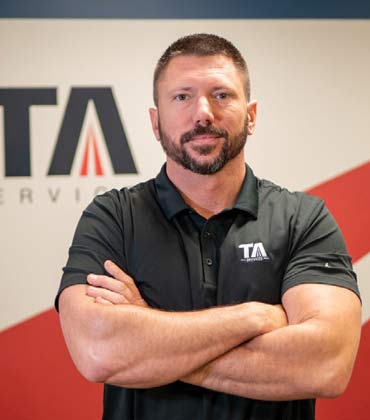
Aron Scalissi, Vice President of Warehouse Business Development, TA Services

Patrick Chew, Vice President - AI & Data Science, AIT Worldwide Logistics

Shannon Mullins, Vice President Human Resources, TruckPro, LLC

Kevin Kernohan, Director, Learning and Development, Canada Post
Air freight solutions in Canada enhance trade efficiency through integrated logistics, digital innovation, sustainable practices, and specialized cargo solutions supporting resilient supply chains.
Air freight solutions in Canada advance through digital logistics platforms, specialized cargo infrastructure, and resilient supply chains supporting complex trade networks.
The New Discipline of Modern Logistics
King City Forwarding, recognized as the Top Air Freight Solutions in Canada 2026, exemplifies how operational discipline and service-led logistics can strengthen freight performance. The firm approaches logistics as a carefully engineered service, where routing decisions are guided by direct customer engagement and operational judgment rather than routine process. This accountability structure enables faster decisions, clearer communication and direct problem resolution, providing customers with both operational stability and immediate access to decision-makers.
This edition also recognizes HyperNile as a Top 3PL Warehousing and Order Fulfillment Services in Canada 2026. The company demonstrates how modern fulfillment networks are evolving from simple warehouse operations into intelligent, technology-enabled logistics systems. By combining warehouse management platforms with targeted automation, integrations and analytics, HyperNile focuses on reducing manual effort, strengthening operational visibility and enabling faster decision-making across fulfillment workflows.
This issue also features perspectives from industry leaders shaping modern logistics and retail operations. Stephen Gordon, Senior Director of Supply Chain at Best Buy Canada, outlines how a localized fulfillment model, routing logic and partnerships with regional carriers helped transform the company’s delivery network into a faster, more resilient system capable of next-day service across major markets.
Complementing this operational perspective, Morris Stern, VP of Retail Technology at The Dufresne Group, emphasizes the role of adaptable technology ecosystems and empowered teams in supporting future retail supply chains. He highlights the growing importance of modular systems, cloud infrastructure and continuous experimentation to ensure technology remains aligned with business strategy.
Together, these stories illustrate how disciplined operational design, strategic partnerships and adaptable technology are redefining logistics performance. As the industry continues to evolve, we invite readers to explore the insights in this issue and examine how these focused approaches can inform the next generation of resilient supply chains.