THANK YOU FOR SUBSCRIBING


Be first to read the latest tech news, Industry Leader's Insights, and CIO interviews of medium and large enterprises exclusively from Logistics Transportation Review


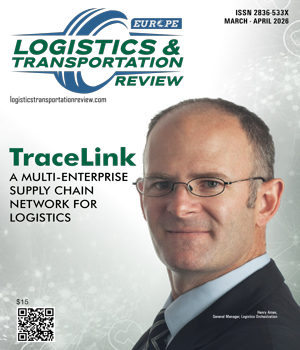
Fostering Resilient Connections across Global Pharma Supply Chain TraceLink, an end-to-end intelligent supply chain platform for life sciences and healthcare, is redefining the pharma supply chain with its comprehensive, multi-enterprise supply chain commerce network. This network of 300,000 life sciences and healthcare entities coupled with its Opus platform is particularly valuable for modern third-party logistics (3PL) use cases, addressing the complexities of logistics and transportation in the pharmaceutical industry. Empowering 3PL Providers Through Digitalization Pioneering the digitalization of the global life sciences supply chain, TraceLink enables 3PL providers to meet the evolving needs of drug manufacturers including the expansion of high-value services and superior supply chain visibility. Drawing on its expertise in track-and-trace and serialization technologies, TraceLink has evolved into a global engine for end-to-end supply chain orchestration. This transformation leverages collective intelligence from a network that spans the entire supply chain spectrum, across the global pharma supply chain, from the largest drug manufacturers to the smallest dispensers. “We are strategically positioned to support 3PL service providers in growing their customer base through affordable enterprise system integration while enabling visibility across an expanding list of high-value service offerings,” says Henry Ames, General Manager, Logistics Orchestration. Meeting the Needs of a Growing Biopharma Market The global healthcare logistics market is projected to grow from $130 billion in 2023 to $152 billion in 2026 – representing ~17% projected growth. This unique market requires highly specialized solutions that are compliant with global regulatory and standards-based guidance. Growing services offered by 3PLs include supply network design, warehouse fulfillment, contract logistics, logistics control tower, and order-to-cash processes to name just a few.
Success in supply chain management comes from more than just powerful technology. It requires unwavering, hands-on support. Magna Valor brings this vision to life through a dynamic, two-pronged approach that combines advanced systems with on-the-ground expertise. Specialising in supply chain management, Magna Valor helps clients optimise workflows, streamline logistics and improve inventory management. Its goal is to make supply chains more responsive and cost-effective with solutions that teams can implement with confidence. “We ensure that supply chain transformations are executed effectively and sustained over the long run,” says Piotr Skobało, managing partner. At its core is a two-speed transformation model—30-day value sprints and structural change. The focused 30-day initiative addresses immediate needs like rapid diagnostics, pilots and visible wins, while structural change lays the groundwork for deeper transformations that redefine operating models and advance automation strategies. Its MV³ framework, Magna Valor Value and Velocity Matrix, underpins this model, providing a clear path through diagnosis, design, delivery and development. Leveraging this framework, operations data is thoroughly analysed to uncover challenges, followed by the design of precise plans and compelling ROI cases. This establishes a strong foundation, ensuring projects proceed clearly and efficiently toward their goals. To turn plans into action, Magna Valor employs a shadow management strategy, assigning interim distribution centre managers and inventory controllers to take temporary line responsibility. It drives daily rhythms through tiered meetings, action logs and KPI-focused visual management, adapting plans as conditions change. The company co-pilots alongside client managers, transferring knowledge and enhancing capabilities before gradually transitioning out. Magna Valor’s vendor-neutral approach to warehouse management systems, transportation management systems, manufacturing execution systems and automation tools equips clients with unbiased, tailored solutions. It helps clients identify better-fitting options, design smarter strategies and supports them in adopting new changes on their terms. The company facilitates efficient scaling across Europe through its partnership with Tompkins Ventures, a global network of over 200 logistics experts, while eliminating the burdens of added bureaucracy..

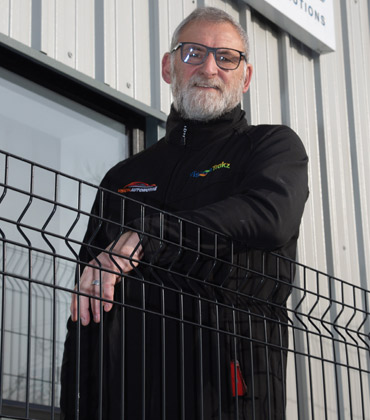
The logistics and telematics market has witnessed the influx of innovative hardware solutions in recent years. However, merely possessing the latest technology falls short of satisfying customers’ needs; they crave exceptional service and personalized interaction. Recognizing this, VisionTrakz, a well-recognized LEADER in the fleet management sector, sets itself apart through its dedication to innovation and customer satisfaction. Its localized presence and commitment to 24/7 availability ensure clients get the support they need whenever they need it. Recently, the facility underwent significant upgrades, including a 3-vehicle installation bay, valeting services, and bespoke office space with a clean room while becoming the main distributor for ROAD ANGEL in Northern Ireland. These enhancements reflect the company's dedication to providing top-notch service to its expanding customer base, setting it apart from local competitors in Ireland. The company offers a comprehensive fleet management solution that goes beyond real-time GPS vehicle tracking. Ranging from standard day to day fleet management to road haulage requirements including remote tacho downloading for both driver and vehicle, this can also be offered with our inhouse tacho reporting to VOSA standards. It analyzes not only location data but also driver behavior (harsh braking, acceleration, cornering) to identify top performers and those needing improvement in one unified system. This combined approach helps improve driver safety and efficiency. For even deeper driver management, it offers a separate service that analyzes data from in-vehicle accelerometers to pinpoint risky driving habits that could lead to accidents or citations.

Jon White, UK Country Manager, InXpress

Dainius Augutis, Head of Transport Function Support Division, Girteka Group

Ferran Soler Sague, Corporate Logistics & Distribution Manager, NOEL ALIMENTARIA S.A.U

Cleo Kortenhorst, Senior Logistics Manager Warehouse & Outbound, Arla Foods Logistics Germany

Saddam Huq, Director, Cold Chain and Logistics, GSK
Logistics 4.0 is reshaping European supply chains, ensuring greater efficiency, resilience, and sustainability in an increasingly digitalised world.
Integrating small satellite constellations into logistics monitoring transforms global supply chains, particularly in Europe.
Navigating the Future of Fleet Management
Sustainability initiatives are also at the forefront of fleet management trends, with an increased focus on reducing carbon footprints and adopting eco-friendly practices. The use of alternative fuels, such as compressed natural gas (CNG) and biofuels, along with electric vehicles (EVs), is becoming more popular among fleet managers aiming to minimise emissions and operational costs.
Driven by these trends, the global fleet management market size is estimated to have a CAGR of 11 percent in the forecast period by 2032, achieving a value of USD 40.6 billion.
This edition of Logistics and Transportation Review Europe brings insights into the latest developments in fleet management solutions and services and how organisations leverage these trends to enhance operational efficiency, achieve sustainability goals, and pave the way for a more resilient and innovative future.
It features a thoughtful leadership article from Rick White, Director of 3PL Services at Cardinal Global Logistics who sheds light on how technology lies in seamless integration and optimise transport space. In addition, it features an article from Dainius Augutis, Head of the Transport function support division at Girteka Group, who talks about the changing trends in the logistics industry.
© 2026 Logistics Transportation Review. All Rights Reserved.