THANK YOU FOR SUBSCRIBING

Be first to read the latest tech news, Industry Leader's Insights, and CIO interviews of medium and large enterprises exclusively from Logistics Transportation Review

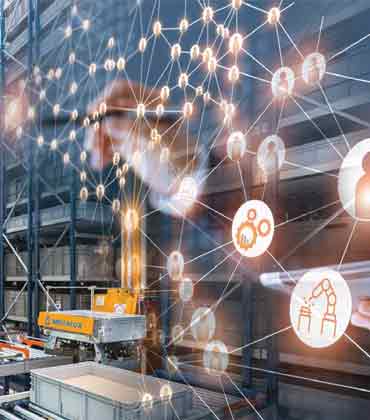
Traditionally, warehouse automation has been considered an anathema to supply chain flexibility and resilience. But by rethinking how warehouse automation offerings are shaped and provided, I believe it is time to rethink this misconception. Today, we can bring warehouse automation and increased flexibility to businesses and support their growth– even during these disruptive and Covid-19 impacted years. The rate of change in global supply chains has never been faster. The rapid growth of e-commerce, new technologies, huge fluctuations in energy prices, and increasing labor shortages combined are forcing companies to rethink and redesign their global supply chains. And this was happening even before business leaders had to worry about global pandemics, container shortages and the urgent need to transition to new environmentally sustainable and circular supply chains. In such a fast-changing environment, it is no wonder that business leaders are increasingly looking for ways to ensure that their global supply chains remain flexible, resilient, and cost-competitive. Traditionally, automation, and particularly warehouse automation, has been considered a capital-intensive investment and one that runs counter to supply chain flexibility and resilience. So how can businesses keep their supply chains flexible, when warehouse automation generally relies on large, fixed, capital investments, often with pay-back periods of more than 5-years? Before investing in warehouse automation, businesses need to be confident that their product dimensions, product mix, order profile and market demand will not significantly change beyond the parameters of the automation technology selected. Such confidence was rare in the past, but in the fast-changing, volatile markets of today, it is almost unthinkable to find a business that can be confident of its business requirements five years from now.
RMS Logistic is a specialist in European time-critical logistics, dedicated exclusively to urgent and express shipments where every minute matters. Its role goes beyond transport. The company operates as a risk-containment partner, taking ownership of decisions when delays threaten production continuity, service availability, or contractual performance. By combining deep expertise in time-critical transport with modern technology, real-time visibility, and proactive risk management, RMS Logistic removes escalation burden from clients at their moments of highest exposure. With over fifteen years of operational experience across Europe, RMS Logistic is built to take control when a production line stops, machinery fails, or an aircraft is grounded and urgently needs a spare part. Rather than acting as a transport vendor, it functions as an external crisis-control partner, owning routing decisions, trade-offs, and consequences while shielding clients from cascading supply chain disruption and multimillion-euro downtime. The same discipline extends into supply chain management, where time-critical logistics is treated as a risk-management capability where missed cut-offs and delayed handovers translate directly into halted operations. Automotive, aerospace, and high-tech manufacturers rely on this approach to protect continuity, reliability, and resilience when tolerance for error is effectively zero. A broad service portfolio supports the model, including next-flight-out cargo, on-board couriers, Aircraft on Ground response, and multimodal transport across a European network. Strong airline relationships and a trusted partner base secure the earliest viable departures without overcommitting capacity. A dedicated 24/7 team manages every movement with GPS tracking, live updates, and immediate proof of delivery..


Fostering Resilient Connections across Global Pharma Supply Chain TraceLink, an end-to-end intelligent supply chain platform for life sciences and healthcare, is redefining the pharma supply chain with its comprehensive, multi-enterprise supply chain commerce network. This network of 300,000 life sciences and healthcare entities coupled with its Opus platform is particularly valuable for modern third-party logistics (3PL) use cases, addressing the complexities of logistics and transportation in the pharmaceutical industry. Empowering 3PL Providers Through Digitalization Pioneering the digitalization of the global life sciences supply chain, TraceLink enables 3PL providers to meet the evolving needs of drug manufacturers including the expansion of high-value services and superior supply chain visibility. Drawing on its expertise in track-and-trace and serialization technologies, TraceLink has evolved into a global engine for end-to-end supply chain orchestration. This transformation leverages collective intelligence from a network that spans the entire supply chain spectrum, across the global pharma supply chain, from the largest drug manufacturers to the smallest dispensers. “We are strategically positioned to support 3PL service providers in growing their customer base through affordable enterprise system integration while enabling visibility across an expanding list of high-value service offerings,” says Henry Ames, General Manager, Logistics Orchestration. Meeting the Needs of a Growing Biopharma Market The global healthcare logistics market is projected to grow from $130 billion in 2023 to $152 billion in 2026 – representing ~17% projected growth. This unique market requires highly specialized solutions that are compliant with global regulatory and standards-based guidance. Growing services offered by 3PLs include supply network design, warehouse fulfillment, contract logistics, logistics control tower, and order-to-cash processes to name just a few.
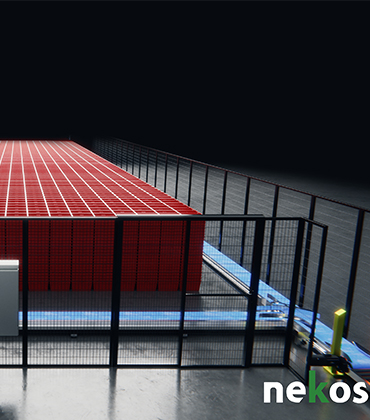
When it comes to logistics and storage, unused space, complex inventory handling, and disorganized warehouses not only slow down operations but also become liabilities over time. A key contributor to this problem is the reliance of most traditional storage systems on long conveyor lines, numerous motors, and intricate networks of sensors to move and track inventory. These systems are space-intensive, expensive to maintain, and difficult to adapt as operational needs evolve. To overcome this challenge, a smarter, more space-efficient system is needed. Nekos, a Finland-based automation expert, has developed a high-density, low-footprint storage solution that directly addresses these common pain points by drastically reducing the number of motors, sensors, and conveyors required. Its systems also minimize energy consumption, maintenance needs, and waste—resulting in a solution that is both operationally efficient and environmentally sustainable. This makes it a future-proof choice for logistics teams facing both business and environmental pressures. “Compared to old conveyor systems, our solution offers around 50 percent more capacity in the same footprint, with far fewer components. That means lower energy use, less maintenance, and a greener overall operation,” says Jaakko Laihorinne, CEO. High-Density Storage with Fewer Components At the core of this innovation is Nekos’ patented high-density tote and crate storage system, launched in 2016. Unlike traditional conveyor-based systems that require large gaps between stacks and equipment, Nekos places stacks directly on the floor with just 20 millimeters of spacing. Each stack can reach 2.2 meters in height, and a single unit can store around 40,000 crates. For growing operations, additional units can be added. Its compact footprint also allows installation in mezzanine areas or tight warehouse layouts. Nekos can customize the system for any crate or tote, offering high flexibility.

Ingrid de Ryck, Chief Sustainability Officer, AB InBev [EBR: ABI]

Saddam Huq, Director, Cold Chain and Logistics, GSK

Ana Esteves, Head of Supply Chain, Salsa

Veronique Kodjo, EVP of Global Manufacturing Supply Chain and Quality, CEVA SANTÉ ANIMALE

Jarle Kjelingtveit, Head of Transport, Coop Norge
European supply chain management services emphasise digitalisation, resilience, sustainability, and advanced technologies to manage complexity across integrated, regulation-driven trade networks.
European supply chain management services enhance visibility, coordination, compliance, and resilience through digital platforms, analytics, and integrated logistics networks.
The Time Advantage: How Risk Ownership Is Defining Logistics’ Next Era
With supply chains now deeply interdependent, logistics is shifting from a cost centre to a continuity engine, one directly tied to production uptime, service stability and contractual performance. RMS Logistic, our featured company, captures this shift with unusual clarity. Instead of selling transport as a transactional service, it operates on a sharper thesis: time critical logistics must serve as a risk containment layer. By owning routing decisions, trade offs and escalation during moments of maximum exposure, it frees clients from the operational drag of crisis response.
The perspectives across this issue reinforce the same trajectory. In CXO Insights, Jarle Kjelingtveit of Coop Norge highlights how scale, sustainability ambitions and geographic complexity elevate predictability and capacity utilisation into board level priorities. From the pharmaceutical world, GSK’s Saddam Huq shows how cold chain logistics has evolved beyond temperature control into a discipline defined by continuous power assurance, qualification and real time risk mitigation.
Looking ahead, the organisations that will set the pace in 2026 are those capable of operationalising continuity across transport networks, partner ecosystems and decision layers. Speed is no longer the headline metric. Reliability under pressure and the trust it earns has become the sector’s most valuable operational currency.