THANK YOU FOR SUBSCRIBING

Be first to read the latest tech news, Industry Leader's Insights, and CIO interviews of medium and large enterprises exclusively from Logistics Transportation Review

OnTrac is the #1 alternative carrier network for last-mile ecommerce deliveries, helping retailers and shippers build a competitive advantage through faster transit times, lower costs, and coast-to-coast coverage. The OnTrac delivery network reaches more than 75 percent of the U.S. online shoppers across 35 states and Washington, D.C., providing retailers with a reliable, scalable alternative to traditional carrier services. With over 65 years of experience, OnTrac is a trusted partner for leading e-commerce brands seeking greater flexibility and efficiency in their supply chains. For more information, visit www.ontrac.com.
A driver arrives at a pickup location right on schedule. The paperwork appears complete, the truck is branded, and everything seems in order. But one small mismatch in the details—an unfamiliar contact name, an outdated insurance certificate—raises a quiet concern. In many cases, that’s all it takes for a high-value load to be handed over to the wrong person. Cargo theft rarely announces itself. It slips through unnoticed, taking advantage of rushed processes, fragmented communication, and manual checks that leave room for error. As the industry accelerates, so does the risk—not because companies are careless, but because legacy systems haven’t kept pace. This is exactly where STT Logistics Group delivers value. More than a freight broker, it acts as a full-service logistics partner, blending operational precision with top-tier security protocols. STT Logistics Group builds its operations around proactive verification and structured workflows—closing the gaps that typically lead to cargo theft or delivery errors. At the heart of this system is a custom-built mobile app, used by every driver to complete a rigorous Know Your Customer (KYC) process. This includes validation of identity, licenses, insurance, and operational authority. An AI-powered system conducts the first round of checks. If anything requires further review, a dedicated back-office team manually verifies the details. Every step—from driver selection to load assignment—is tracked and cross-referenced. Before a pickup occurs, shippers receive verified credentials, ensuring the person on-site is fully authorized and cleared. "Our back office team verifies each driver through an AI process, cross-checking insurance, licenses and any claims. If AI doesn’t clear them, manual approval makes sure that they’re authorized, insured and reliable before dispatching. This guarantees only qualified drivers handle our shipments,” says Andre Corbert, CEO of STT Logistics Group.


The logistics industry is in a state of flux. With rising tariffs, growing security concerns and unexpected global disruptions, it’s time for traditional supply chain models to be revamped. That’s precisely where ITF Group makes all the difference. As an asset-based 3PL provider, it uses a dedicated fleet equipped with dual-GPS tracking systems and integrated technology platforms to deliver reliable, full-service logistics. Its transportation, warehousing, global forwarding and fulfillment services are supported by a transportation management system (TMS) that offers clients live shipment visibility and instant proof-of-deliveries (POD). This enables ITF Group to take a proactive, value-driven approach that aligns every logistics move with the client’s cost-efficiency goals and service expectations. “The solutions we provide to our clients and how we support their business are all focused on optimizing and reducing their transportation costs while helping improve their quality of service,” says Sam Burkhan, CEO. Client-First Logistics Excellence With a fleet of over 400 trucks and nearly 2,000 trailers, ITF Group brings more than capacity; it brings commitment. It operates as a true strategic partner, focused on long-term value over transactional service. In a market shaped by constant change, its client-first mindset provides a practical framework that drives every solution. What truly sets ITF Group apart is the dedication of its people. For each client account, the company assigns a dedicated team of managers who handle the tracking, tracing and ontime delivery performance. In addition, the ability to provide equipment solutions such as drop trailers and real-time visibility to the equipment enables it to pre-plan all of the shipments three to four days in advance for its clients. This approach, shaped by ongoing client requirements, enables ITF Group to address the core challenges businesses face every day. Two key concerns are tariffs and rising cargo theft. With shifting trade policies, companies struggle to predict shipping costs, while security breaches threaten supply chains. ITF Group mitigates these risks head-on, understanding each client’s exposure and supporting their business through targeted actions, adaptable planning and a deep understanding of individual pain points. End-to-End Solutions That Optimize Performance ITF Group’s portfolio spans transportation, warehousing, distribution and fulfillment. What makes these services stand out is how they’re integrated through technology—offering visibility and enhanced control.

Greg Javor, SVP, Global Supply Chain Operations, Mattel [NASDAQ: MAT]

William Diamond, Head of Fleet Management, UniFirst [NYSE: UNF]

Matt Maglio, Regional Vice President, Greyhound Lines

Bill Chapman, Vice President, Safety, Universal Logistics Holdings

Kelsey Knight, Chief Commercial Officer, Slumberkins
Heavy hauling services minimize downtime, improve safety, and make the transportation of oversized industrial goods smooth and compliant with route and regulatory requirements.
Last-mile operations are being transformed by highly advanced analytics and sustainable logistics frameworks to ensure operational precision and increased trust among consumers.
Operational Excellence in Modern Logistics
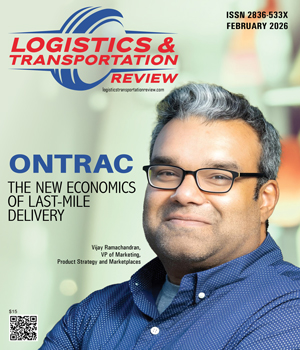
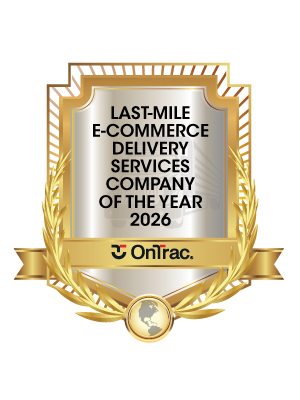
At the centre of this issue is OnTrac, recognised as the Last-Mile E-Commerce Delivery Services Company of the Year 2026. As parcel-carrier consolidation accelerates and legacy networks struggle to align with modern e-commerce demands, OnTrac has emerged as a scaled alternative built specifically for residential delivery. Reaching more than 75 percent of U.S. online shoppers, the company enables retailers to achieve faster delivery at lower cost, often replacing air with ground while maintaining service promises. Its seven-day operations, precise delivery-date capabilities, and retailer-aligned operating model have positioned delivery not as a constraint, but as a growth lever. With strong adoption among enterprise and midmarket retailers, OnTrac is reshaping how last-mile networks support conversion, loyalty, and financial discipline.
Leadership perspectives deepen this discussion. Danny Rose, SVP of E-Commerce, Advertising & Digital Marketing at Playa Hotels & Resorts, outlines how building a strong digital foundation, controlling distribution, and simplifying the consumer path to purchase strengthened direct channels, even through severe disruption. Complementing this, Kelsey Knight, VP of Global E-commerce at Slumberkins, shares lessons from the pandemic on prioritising profitability, strengthening retention, and maintaining internal alignment to build resilient e-commerce operations.
Together, these stories highlight that sustainable growth in logistics and transportation relies on more than operational efficiency alone. Strategic clarity, disciplined execution, and adaptability to shifting market demands are equally critical. We invite readers to explore this issue in full and engage with the leaders shaping the next phase of the industry.