THANK YOU FOR SUBSCRIBING

Be first to read the latest tech news, Industry Leader's Insights, and CIO interviews of medium and large enterprises exclusively from Logistics Transportation Review

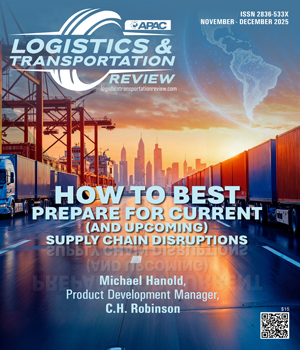
Weekly meal planning is a recurring event in our household. Although this activity is not particularly exciting, every Saturday my wife and I sit down to plan out our family meals. This process helps us avoid the mid-week supermarket scramble, as well as sidestep overspending on items we don’t actually need. Sound familiar? Supply chain planning is no different when it comes to yielding efficient results, especially this year. It’s no secret the way companies ship their freight has shifted due to COVID-19. C.H. Robinson is great at helping customers secure capacity and optimize their global freight across our suite of service offerings as their needs evolve. Due to COVID-19 market changes, our global team of supply chain experts has spent extra time securing expedited less than container load (LCL) capacity for companies that can work with extra lead time.Another big change is how many ghost or charter flights are used to make up for lost capacity from the mass decline in global passenger travel. “Planning ahead and using forecast data can be the difference needed to turn an efficient or dysfunctional supply chain into a strong, agile one that is ready to face this volatile market” However, COVID-19 is not the only event putting pressure on the freight market now. And with passenger travel not expected to recover until 2024, proactive solutions are needed to avoid current and upcoming disruptions.
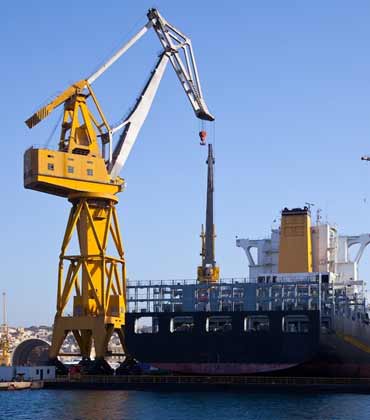
The future of port operations is now. Intelligent systems and adaptive digital tools are shaping a more responsive and resilient terminal environment. MAXTECH is leading this effort by delivering advanced engineering and practical innovation. A pioneer in applying AI across the port, marine and offshore engineering sectors, it builds cranes, lifting technologies and complete material-handling packages. It blends intelligent features and integrated systems to create solutions aligned to each customer’s needs, helping ports adopt modern technology without disrupting existing workflows. “We don’t just manufacture quality equipment. We deliver a comprehensive, adaptive and reliable partnership that drives operational excellence,” says Alina Zhang, sales director. Product development at MAXTECH follows a customer-centric cycle that turns operational needs into applied solutions. It begins with a conversation with the customers to fully understand their working demands. These requirements are translated into solutions that reflect field requirements instead of theoretical assumptions. MAXTECH’s production system is built on structured R&D, detailed modeling and controlled fabrication. Its engineering team utilizes 3D modeling to refine structures and uses finite element analysis simulation to test significant loads and dynamic forces. Programmable logic controller-based hydraulic and electrical integration helps smoother response during operation. Advanced technology features are integrated into products to equip clients with improved control in demanding environments. Remote monitoring, load indication and anti-sway systems help operators work with greater stability. Its offshore and marine crane includes an AI-powered load optimization function that reduces fuel consumption. MAXTECH plans to introduce its first lifting robot in 2026, moving the marine and offshore industry toward autonomous lifting systems with self-learning and judgment capability. By developing equipment rooted in practical capabilities, MAXTECH helps clients tackle complex challenges in the industry with ease. One persistent issue port operators face is in loading and unloading goods from larger vessels. The limited reach of cranes often makes it challenging to access the farthest container rows on the ship. Its patented Articulated Parallel Spreader addresses this by extending the working radius by up to two meters, eliminating the need for costly structural changes. With a 60-day production and delivery window, it limits operational disruption and allows ports to resume full activity faster. .


SIAMCSP(SIAM Commercial Seaport), a family-owned enterprise, has established a noteworthy presence in the international maritime trade sector. Renowned for its operational precision, commitment to safety, and adaptability, the firm excels in its service offerings. Despite its compact scale, SIAMCSP successfully operates as a versatile port that handles containerized and bulk cargo. The company’s infrastructure encompasses various facilities, like warehouses, container terminals, free zone areas, and open yards, establishing it as a comprehensive service provider. SIAMCSP’s holistic approach ensures that it meets its client’s various requirements, making it a premier, multifaceted port solution. “We try to be flexible, offer customization and be very customer-centric. We see ourselves not only as a port but as a logistics solution provider,” says Siripen Chinsiri, Marketing Director at SIAMCSP. Consequently, the firm helps clients optimize and streamline their logistics operations. This proficiency is particularly beneficial for international clients who may not be familiar with Thailand’s laws. In addition, the company’s port hosts customs authorities on-site, which simplifies all import and export procedures.
"Our wide-ranging freight services position us as a pivotal one-stop solution for our clientele," states Vincent Chan, president of Honour Lane Shipping (HLS), reflecting on the company's journey since its establishment in 1997. This statement underscores HLS's evolution from a feeder service between South China and Hong Kong to a leading solution provider in the global freight industry. Today, HLS stands tall as a full-service logistics firm offering an array of services, including maritime transportation, warehousing, and inventory management. Its journey from a regional feeder service to a global freight forwarding powerhouse has been nothing short of remarkable. The transformation of HLS into an international Non-Vessel Ocean Common Carrier (NVOCC) in 2002, prompted by the operational start of the Yantian terminal, marked a pivotal shift from being a regional feeder service to global freight forwarding. This strategic move was due to the advent of direct shipping routes and the need to reduce costs amid carrier pressures. Amidst challenges emerged opportunities, and HLS seized them with aplomb. HLS strategically expanded its focus to the U.S. Free Onboard (FOB) market, especially during the 2002 West Coast strike, thereby solidifying its financial standing and establishing the U.S. as its primary export market. This strategic market positioning accounts for 70 percent of HLS's export volume, ranking it fourth in volume from China and sixth from Asia. Having expanded its services into critical markets, especially Europe, Latin America, Australia, and the Middle East, HLS has dedicated regional teams that facilitate exports from Asia. The company's extensive network, with 35 offices in Asia and the U.S., ensures seamless operations from pre-carriage to destination. HLS has also diversified its offerings to support customers shipping from China to South America, forming a dedicated Latin American market team.


Henning Pottharst, Manager Global Digital Customer Experience (DCE) Smart Solutions, Hellmann Worldwide Logistics

Nathan Kurland, Chief Revenue Officer, trimac Transportation

Teguh Himawan, Head of Warehouse and Distribution - Greater Jakarta, A.P. Moller - Maersk

Georgie Arthur, Port Manager Dampier, Pilbara Ports

Hendy Harianto, Group Chief Information Technology Officer, Meratus Group
Intermodal services in APAC are evolving through digitalization, sustainability focus, and infrastructure expansion, enabling efficient cross-border trade, resilient supply chains, and scalable logistics growth.
APAC marine crane and port equipment manufacturers advance productivity, automation, sustainability, and resilience through modular design, digital integration, and collaborative infrastructure solutions.
Transforming APAC's Maritime and Logistics Landscape
In the marine crane and port equipment manufacturing sector, automation and smart technologies are improving port efficiency by handling greater cargo volumes with reduced downtime and energy use, setting new sustainability standards. Intermodal services providers are enhancing global supply chains by seamlessly integrating sea, rail, and road transport, ensuring faster and more reliable delivery.
At the same time, multifaceted port and logistics companies are driving innovation with end-to-end solutions, including warehousing, distribution, and value-added services, optimizing supply chains and boosting the resilience of global trade.
In this edition, we feature insights from two influential leaders shaping this transformation. Stuart Darby, Managing Director – Oceania at Gebruder Weiss, emphasizes the growing importance of digitalization in logistics. He points out that to stay competitive, logistics providers must focus on enhancing connectivity and visibility across the supply chain. Real-time data and seamless communication are essential for improving efficiency and ensuring faster deliveries, which are crucial in today’s fast-paced market.
Meanwhile, Teguh Himawan, Head of Warehouse and Distribution -Greater Jakarta at A.P. Moller-Maersk, highlights how sustainability and technology go hand in hand in shaping the future of logistics. He stresses that the future of logistics is not just about moving goods more efficiently but doing it in a way that reduces environmental impact. Innovation, he believes, must always balance operational excellence with environmental responsibility to create a truly sustainable and efficient global supply chain.
Together, these leaders are shaping a future where APAC’s maritime and logistics sectors are more efficient, sustainable, and connected than ever before. The advancements in technology, combined with a commitment to environmental responsibility, will continue to drive innovation in the global supply chain.
© 2026 Logistics Transportation Review. All Rights Reserved.