THANK YOU FOR SUBSCRIBING


Be first to read the latest tech news, Industry Leader's Insights, and CIO interviews of medium and large enterprises exclusively from Logistics Transportation Review


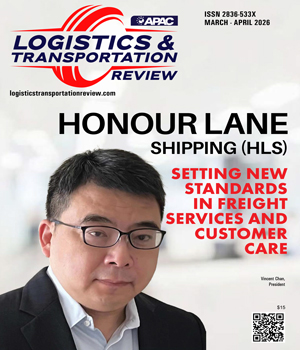
"Our wide-ranging freight services position us as a pivotal one-stop solution for our clientele," states Vincent Chan, president of Honour Lane Shipping (HLS), reflecting on the company's journey since its establishment in 1997. This statement underscores HLS's evolution from a feeder service between South China and Hong Kong to a leading solution provider in the global freight industry. Today, HLS stands tall as a full-service logistics firm offering an array of services, including maritime transportation, warehousing, and inventory management. Its journey from a regional feeder service to a global freight forwarding powerhouse has been nothing short of remarkable. The transformation of HLS into an international Non-Vessel Ocean Common Carrier (NVOCC) in 2002, prompted by the operational start of the Yantian terminal, marked a pivotal shift from being a regional feeder service to global freight forwarding. This strategic move was due to the advent of direct shipping routes and the need to reduce costs amid carrier pressures. Amidst challenges emerged opportunities, and HLS seized them with aplomb. HLS strategically expanded its focus to the U.S. Free Onboard (FOB) market, especially during the 2002 West Coast strike, thereby solidifying its financial standing and establishing the U.S. as its primary export market. This strategic market positioning accounts for 70 percent of HLS's export volume, ranking it fourth in volume from China and sixth from Asia. Having expanded its services into critical markets, especially Europe, Latin America, Australia, and the Middle East, HLS has dedicated regional teams that facilitate exports from Asia. The company's extensive network, with 35 offices in Asia and the U.S., ensures seamless operations from pre-carriage to destination. HLS has also diversified its offerings to support customers shipping from China to South America, forming a dedicated Latin American market team.
SIAMCSP(SIAM Commercial Seaport), a family-owned enterprise, has established a noteworthy presence in the international maritime trade sector. Renowned for its operational precision, commitment to safety, and adaptability, the firm excels in its service offerings. Despite its compact scale, SIAMCSP successfully operates as a versatile port that handles containerized and bulk cargo. The company’s infrastructure encompasses various facilities, like warehouses, container terminals, free zone areas, and open yards, establishing it as a comprehensive service provider. SIAMCSP’s holistic approach ensures that it meets its client’s various requirements, making it a premier, multifaceted port solution. “We try to be flexible, offer customization and be very customer-centric. We see ourselves not only as a port but as a logistics solution provider,” says Siripen Chinsiri, Marketing Director at SIAMCSP. Consequently, the firm helps clients optimize and streamline their logistics operations. This proficiency is particularly beneficial for international clients who may not be familiar with Thailand’s laws. In addition, the company’s port hosts customs authorities on-site, which simplifies all import and export procedures.


There has always been two versions of the truth in freight measurement. The shipper’s tape measure declares one set of dimensions. The carrier’s dimensioning scanner declares another. Each is convinced they are right — but the invoice tells a different story. What seems like a few inches of difference quickly becomes a second bill, an unrecoverable cost in many instances and a disagreement between shipper and carrier. Cubemetrix was built to end that divide. Developed by Australian innovators with over 100 years of freight dimensioning expertise combined, Cubemetrix delivers one trusted standard for measurement. It consists of three components—the Cubetape handheld device, wearable data hub and the CubeX software. It easily integrates with scales also. Cubetape captures dimensions electronically and integrates them directly into ERP, billing and transportation systems via Bluetooth. Delivered through a Dimensioning-as-a-Service (DaaS) model, the solution provides audit-ready accuracy from the moment freight leaves the dock. “We offer one measurement, one record, one version of the truth that keeps shipments compliant and invoices predictable,” says Kerry Holmes, VP of Global Development. “With us, accuracy becomes automatic with no manual entry, mismatched numbers or surprise re-invoices and having the ability to capture freight images on the wearable mobile data hub eliminates debate over damages.” Nowhere is precision more critical than in the U.S., where the National Motor Freight Traffic Association (NMFTA) has introduced stricter dimensioning and classification rules, turning accuracy from a best practice into a business mandate. In this environment, precision isn’t just about avoiding penalties but about creating confidence across every shipment. Cubemetrix delivers that assurance with a certified record trusted by both shippers and carriers. For the entire logistics ecosystem, it marks the end of guesswork and the beginning of a common language for measurement.

Ashleigh Turner, Procurement Fleet & Logistics Manager, Australian Agricultural Company (AACo)

Lenny S. Budiman, Head of Supply Chain MANAGEMENT, PT. SARIMELATI KENCANA Tbk

Georgie Arthur, Port Manager Dampier, Pilbara Ports

Veronica Denner, Head of Risk & Logistics, APG & Co Pty Ltd

Yvette Mihelic, Director of Customer Experience, John Holland
APAC logistics firms must prioritize cybersecurity to protect sensitive data and ensure operational continuity. They must also leverage advanced technologies, workforce education, and regulatory compliance to navigate the evolving threat landscape.
Rail freight in APAC is essential for sustainable logistics, offering lower emissions, enhanced efficiency, and capacity. With infrastructure investments, digital innovations, and government support, it plays a pivotal role in reducing transportation's environmental impact.
The Rise of Automation in APAC's Intermodal Services
The integration of AI, the IoT, blockchain technologies and the burgeoning concept of Mobility-as-a-Service (MaaS) are being leveraged to optimize supply chain management, enhance logistic operations’ automation, and promote smart shipping solutions. Such technologies aim not only to support the efficiency and sustainability of transport operations but minimize pollution, aligning with the global push towards environmental conservation.
The APAC freight and logistics market size is estimated at $3.73 trillion in 2025 and is expected to reach $4.56 trillion by 2029, growing at a CAGR of 5.13% during the forecast period 2025–2029.
This edition of Logistics and Transportation Review APAC brings insights into the latest developments in intermodal services in logistics and how companies align with the latest trends for greater transparency and actionable insights in the workplace.
It features a thought leadership article from Lenny S. Budiman, Head of Supply Chain Management at PT. SARIMELATI KENCANA Tbk., who sheds light on how the near-sourcing trend in Mexico poses challenges due to limited direct air freight service from China. It also features an article from Teguh Himawan, Head of Warehouse and Distribution at A.P. Moller – Maersk, who emphasizes the importance of how construction project managers must prioritize human resources alongside managing constraints like budgets and deadlines for project success.
In this edition of Logistics and Transportation Review APAC, we also bring you the story of a top logistics provider offering comprehensive logistics solutions with a strong emphasis on customer satisfaction and technological innovation. Honour Lane Shipping (HLS) has transformed from a regional feeder service to a global logistics leader, prioritizing strategic growth, technology and customer satisfaction to solidify its position in the industry, emphasizing adaptability, innovation and employee welfare.
We hope you find the right partner to meet your organization's needs.
© 2026 Logistics Transportation Review. All Rights Reserved.