THANK YOU FOR SUBSCRIBING


Be first to read the latest tech news, Industry Leader's Insights, and CIO interviews of medium and large enterprises exclusively from Logistics Transportation Review

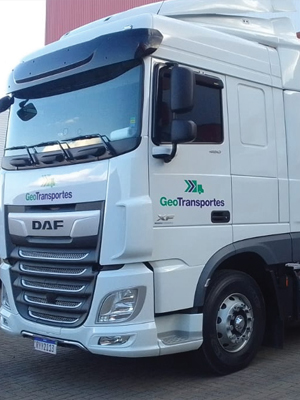
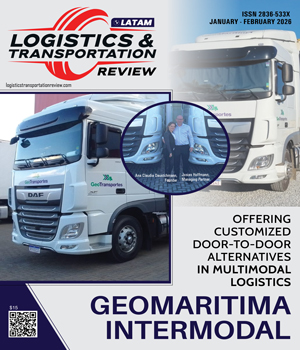
Founded in 2010 by the visionary Ana Claudia Deustchmann in the heart of Rio Grande do Sul, Brazil, Geo Maritima Intermodal has become a symbol of excellence in the Latin America cabotage sector. Geo Maritima’s success is propelled by its foundation built on unparalleled expertise and a relentless commitment to exceptional customer service. This approach has transformed the company from a mere service provider into a trusted partner, skillfully navigating the complexities of global trade. “At Geo Maritima, customer needs are the priority and solutions are crafted to meet their specific requirements,” says Josias Hoffmann, managing partner at Geo Maritima. Recognizing an import/export shipments gap in the transport market, Geo Maritima expanded into cabotage, integrating road and sea transport for door-to-door operations. The company identified a significant demand for transporting frozen protein, especially frozen chicken, from the poultry industries in southern and southeastern Brazil to customers in the northern regions. This led to the launch of a successful multimodal cabotage operation using refrigerated trucks. Building on this success, Geo Maritima established a road transport company, GeoLogistica, in 2013 in Itajai, Santa Catarina. This new venture focused on container collections in southern Brazil, benefiting from its strategic location in a port city to streamline operations. Today, the Geo Group, comprising Geo Maritima and GeoLogistica, has firmly established itself in the cabotage market.
Building on five decades of legacy, the COLI Group was established in Germany as a liner agency for managing break bulk cargo shipments destined for the Western Mediterranean region. Expanding its franchise to the Latin American (LATAM) region, COLI Shipping & Transport do Brasil was established in 2015 to connect the burgeoning LATAM economy with the rest of the world. Since entering the Brazilian market, COLI has earned a strong market reputation and extensive local support, offering international standards in shipping, evidenced by various certifications, particularly in handling heavy and oversized cargo. “In LATAM, where diverse landscapes pose challenges, our experience and market analysis guide us in overcoming obstacles and tailoring our services to meet the most intricate client needs,” says Carlos Gouveia, commercial director. “With expertise spanning industries such as energy, mining and technology, we serve as facilitators of trade, offering seamless transportation solutions across sea and land. We are currently expanding international shipment operations to include 4PL logistics providers and partners to streamline supply chains.” COLI’s ability to address the complexities within the intermodal space is a testament to its expertise. Key areas like Rio de Janeiro, Panama and the Amazon play crucial roles in shipping routes but also present distinct challenges beyond human control. Its investments in Guyana, give the company an additional edge in South America, expanding its activities with eyes to Suriname, Trinidad and Tobago, Colombia and Ecuador.

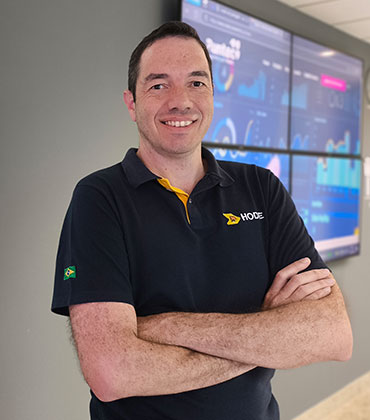
The logistics industry keeps global commerce moving, orchestrating the flow of billions of goods every day. Yet, when it comes to visibility solutions, many providers rely on rigid, one-size-fits-all systems, leaving businesses frustrated by generic tracking and inflexible workflows. Companies demand customization, real-time insights, and seamless integration— but instead of adapting, most logistics providers resist change, sticking to outdated, off-the-shelf solutions. The result? Frustration, inefficiency, and missed opportunities in a world that runs on speed and accuracy. Runtec stands apart from the rigid, one-size-fits-all approach dominating the logistics industry. Known for its flexibility, the company has built a reputation as a provider that listens, adapts, and delivers tailored solutions. While competitors shy away from modifications, Runtec sees them as opportunities to innovate, expand, and meet real-world challenges head-on. At the core of its offerings is HODIE, a modular logistics suite designed for shippers, logistics operators, and carriers. Managing everything from order placement to delivery and returns, HODIE provides real-time tracking, automated workflows, and full cargo visibility. What makes it distinct is its adaptability—rather than forcing clients into a rigid system, it evolves to meet their specific operational needs. “At Runtec, innovation and trust are fundamental pillars of our services. Through a strong and reliable system, we provide efficient management that exceeds our customers’ expectations,” says Mauricio Fabri de Oliveira, founder and president of Runtec. Unified Dashboard for Real-Time Insights HODIE provides complete control over reverse logistics, additional costs, and scheduling for clients requiring specific delivery times. The module features dashboards and monitors that track shipment status and delivery performance. Many logistics providers offer multiple modules, but these are often disconnected, expensive to implement, and unreliable for real-time decision-making. HODIE solves these pain points by integrating all functions into a single database, eliminating communication bottlenecks and enabling seamless collaboration across B2C, B2B, and large retail customers. With real-time communication on a unified platform, HODIE provides end-to-end visibility, empowering businesses to make strategic, data-driven decisions. Clients can also manage daily operations and store information in one place to develop operational and tactical KPIs. A Fully Integrated Logistics Powerhouse From its inception with the initial HODIE module, every subsequent addition to the system was developed to meet the specific needs of both new and existing clients. Early on, the team recognized the necessity of seamless communication between modules. Equally important was a thorough approach to studying and integrating the various operational processes involved. The result is what exists today—the HODIE Suite, a fully integrated logistics powerhouse.
Clovis A. Gil, President, Ativa Logística

Alberto Patrus, National Transportation Manager, Patrus Transportes

Arnaldo Soares, General Manager of Transport Engineering, MRS Logistica SA

Juan Pablo Roa Barragán, Logistics director, OFFCORSS C.I. HERMECO S.A.

Bruno Mendes, Head of Logistics, Catupiry

Adam McKinney, General Transportation Manager, Walmart

Franco Liotti, Head of Logistics, Holcim Argentina
Rodrigo Bastos, Director Of Towage Operations, Wilson Sons

Ricardo Roschel, Supply Chain Director, Brinquedos Estrela
Last-mile delivery represents the most critical innovation in modern logistics. It combines advanced technologies, environmentally friendly practices, and customer solutions that meet consumers' evolving needs.
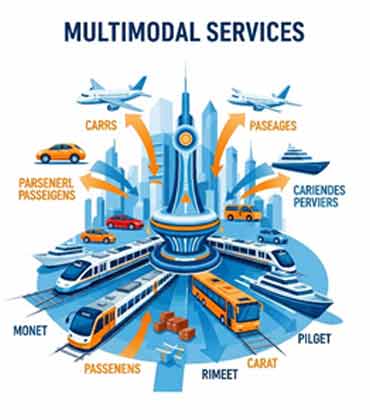
Multimodal transportation enhances efficiency, reduces costs, improves flexibility, promotes sustainability, and optimizes infrastructure, benefiting businesses and passengers.
Embracing Innovation in Intermodal Transportation
According to a report by Mordor Intelligence, the South American freight and logistics market size is estimated at 244.3 billion USD in 2025, according to Mordor Intelligence. It's also projected to reach 311.7 billion USD by 2030. growing at a CAGR of 5.20.
This growth is fueled by technological advancements and a broader consumer preference for sustainable and cost-effective options. Digital platforms are contributing to better coordination and real-time information sharing among sea, rail and trucking sectors. High-speed rail systems with automated cargo handling and predictive maintenance are increasing operational efficiency and reliability. Advancements in maritime shipping like AI assisted route planning and automated docking systems improve navigation. At the same time, electric trucks are fast emerging as the ideal solution for minimizing carbon emissions.
This edition of Logistics and Transportation Review Latin America provides a bird’s-eye view of the developments in the logistics industry and how organizations are adopting lucrative ways to leverage intermodal services.
We have curated thought leadership articles from industry experts, including Bruno Mendes, Head of Logistics at Catupiry and Ricardo Roschel, Supply Chain Director, Brinquedos Estrela.
We hope this edition of Logistics and Transportation Review Latin America’s intermodal service providers helps you and your organization build the partnership needed to foster an environment driven by efficient technology.
© 2026 Logistics Transportation Review. All Rights Reserved.